Buddha's Smile School

Education with Love, Care & Motivation

Visions of a hope through the hearts and minds of our youth

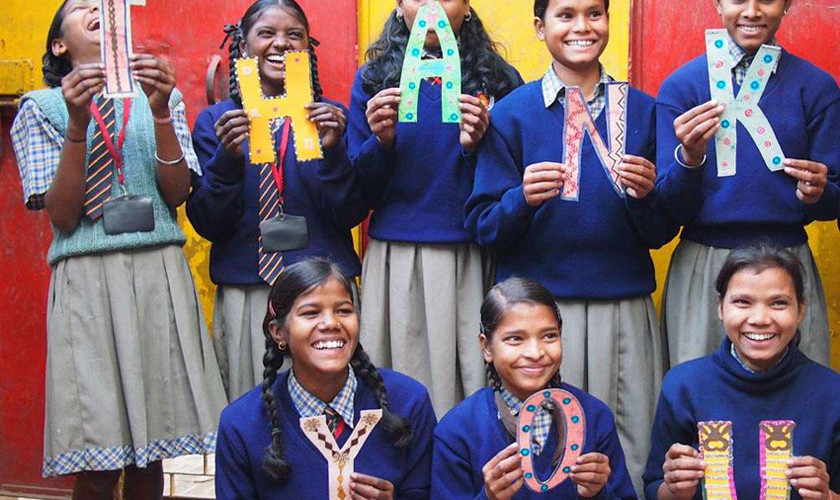
Last spring, Buddha Smile School received an invitation for their students to participate in an international poetry exchange called Poems for Peace. With great enthusiasm, eleven-year-old Daisy Saini embraced the idea and inspired 14 students from grades 5 and 6 to ponder the meaning of peace and express their thoughts in pictures and poems. Daisy also wrote a peace poem and her enthusiasm was contagious–many of the adults at BSS contributed their musings too.

Poems for Peace is a cross-cultural poetry exchange that aims to strengthen understanding between youth worldwide, enabling curiosity and knowledge to replace prejudice, apathy and fear. Students are asked to consider the meaning of peace, where it abides, how it is created, how it is destroyed and how, as peacemakers, they can contribute to world peace. All poems are posted on the Poems for Peace website, www.poemsforpeace.org.

Poems for Peace loosely describes a poem as any written expression that conveys a heart-felt message, an inner truth. It may appear as a letter, prayer, story, traditional poem or a picture. It’s through these expressions of the heart that one can see beyond the constructs of the mind and appreciate the common thread that unites us all.

So far, Poems for Peace has received poems from India, Nepal, Tibet Autonomous Region of China, Israel, Jamaica, Tanzania and The United States. For more information about Poems for Peace or to contribute a poem, please visit www.poemsforpeace.org.

Three poems:

Listen to our Prayers

God, please listen to our words of prayer:
By reading and writing, we become more skillful.
Always do the right things.
Let us make peace shine all over the world.
By Dharam Chand Kumar, 5th Grade, Age 12

My Heart Fills with Peace

When stars and moon get up at night
My heart fills with peace
When butterflies sit upon the flowers
To collect nectar and pollen
When rivers and seas dance
Then my heart fills up with peace.
By Mamta Kumar, 5th grade, age 10

Gandhi’s Teaching

Never see or speak wrong or cause harm to others.
Never pay attention to the negative things in the world.
This is the teaching of Mahatma Gandhi.
Everyone try to practice this valuable lesson,
Which will help everyone to attain peace,
A state of mind with no wars,
Only silence.
By Shiv Kumar Patel, 6th grade, age 11

When Chandra Bhan Prasad visits his ancestral village in these feudal badlands of northern India, he dispenses the following advice to his fellow untouchables: Get rid of your cattle, because the care of animals demands children’s labor. Invest in your children’s education instead of in jewelry or land. Cities are good for Dalit outcastes like us, and so is India’s new capitalism.

Mr. Prasad was born into the Pasi community, once considered untouchable on the ancient Hindu caste order. Today, a chain-smoking, irrepressible didact, he is the rare outcaste columnist in the English language press and a professional provocateur. His latest crusade is to argue that India’s economic liberalization is about to do the unthinkable: destroy the caste system. The last 17 years of new capitalism have already allowed his people, or Dalits, as they call themselves, to “escape hunger and humiliation,” he says, if not residual prejudice.

At a time of tremendous upheaval in India, Mr. Prasad is a lightning rod for one of the country’s most wrenching debates: Has India’s embrace of economic reforms really uplifted those who were consigned for centuries to the bottom of the social ladder? Mr. Prasad, who guesses himself to be in his late 40s because his birthday was never recorded, is an anomaly, often the lone Dalit in Delhi gatherings of high-born intelligentsia.

He has the zeal of an ideological convert: he used to be a Maoist revolutionary who, by his own admission, dressed badly, carried a pistol and recruited his people to kill their upper-caste landlords. He claims to have failed in that mission.

Read the Full Story | NY-Times

19 Aug, 2008

My Story by Helga Frech

Posted In: School Updates

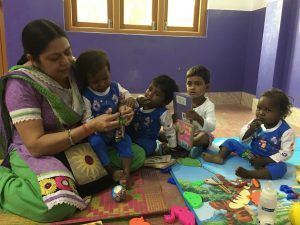
Located on the outskirts of Varanasi is a small and simple school — Buddha’s Smile School. The space for the students is very restricted, and classrooms are of only 3 walls and a roof.

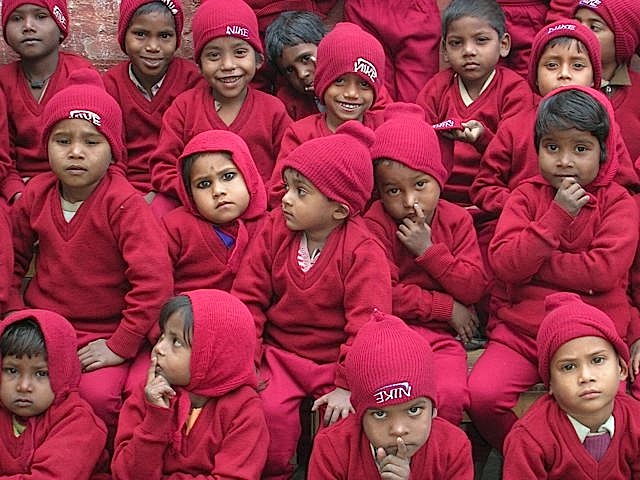
In a confined area. Less than 200 m2. 220 Untouchables carry of their daily studies. They sit on small benches, and share tables with at least 4 others. The classes are from the 1st grade to 5th grade. They share their classes with at least 20 other students, and as previously mentioned not a lot of space… to even stretch your legs.

When we arrived. The only knowledge we had of the place was: it was a school for beggar children and we expected to be consumed by the masses of children that would see their chance in getting some money, from a couple of tourists.

Fact was, we arrived there with no previous notice, the children were all seated in their classes, and the youngest seated on the outside, having time to play child games. Not a single child, rose from their position, and headed for us. Definitely on the spot you could see they were well behaved.

School passed and off they went home. Grade by grade was aligned, and all well organized they went into the rickshaw’s that would transport them back “Home”.

Not that all the other previous impressions were special, but one did really stand out. This was special. Never do I believe I will see such a thing again. Two children from one of the lower grades were crying. Not because they had fought. But because they did not want leave. I will not refer to the place where they came from as their home. To them it did not feel so. At the place where they live, they were the income generators. The ones that cook, clean care for their parents their brothers and sisters. These kids were the ones that had to serve for their parents. They had to go to streets and beg, they were the ones that were treated as animals. Not in the streets, but in their homes.

The headmaster had countless examples, and just to mention one.

A girl spent half the day at school. She finished her schooling, and went of to begging. Following that she had earned an income to the family. Not much. But enough to buy rice for the family. The day was not over by then. Of course there were the daily home choirs to be done. Cleaning, washing, and caring for the young. By evening she had to cook dinner. Here she boiled the rice she had worked for during the day. By mistake, while carrying the boiled rice, she accidentally dropped the food. This girl did not get a break for the following 2 minutes or more. She was beaten in every way possible, and fists flew from all angles. She was beaten so badly, she did not show for school for some days.This was of the countless examples they had.

What was worth mentioning about this small story is the background information.

In a poor family, life is not that easy. First of all, money comes first, and the parents are willing to do anything for money.

The headmaster told us. Children are not produced, because of love, they are money earners, and the more you have the better. The more people you have to earn the money the easier it becomes. A mother with a young child is very successful. Children at a young age are well off in the begging business. They can easily earn few rupees. Their daily income would be of an avg. of 25 rupees, after having eaten from it. That is what they bring back home.

But father in general is not willing to lift a finger. Life for him is too much. If nobody offers him something, then it is extremely rare for him to search for a job, not mention, if he finds one, there has to be a substantial income. He will be the one that will lie at home, and do zero.

After all who is willing to give a beggar a job, which is willing to give a beggar anything apart from a little money and food, which in Indian society would ever trust a beggar? To him this is reason enough to decide to do nothing at all. His wife will have the same problem; even if they were to look, and find a job they would work long quantities of hours, and get a small income.

It is much easier, to sit, and only lift your hand, and get money, maybe less, but much easier. A day’s of hard labor does not pay off.

So what a hard life! There is much to think about. Therefore the father results in drinking. He will set his need first, drinking and gambling before his children’s stomach. He can not cope with the daily life, and all the problems, and needs.

These were the words of a headmaster with 15 years experience, in dealing with these people.

To make it more understandable:

1st example:

A child beggar, their income can vary from 0-70 rupees a day. That is what I was presented by the few I asked. So to say, in average something like 25 rupees per day. This in a month would result in: 750 rupees, a month.

2nd example:

A skilled weaver in Varanasi will have an income of 50 rupees per day, this in a month is 1500 rupees. Twice as much as what a beggar earns. The not so skilled weavers would earn 800 rupees a month.

Definitely it is much easier to earn money begging. You work as long as you please, you do what you want. Whiles for a weaver he has working hours. People tell me it is only 8 hours daily. But I see many working more than that. It is very hard work for very little money. But then, the father does not have to work, because he has his kids to do it for him. So of course not, they can manage to survive, so no need to stress.

Another small example about how meaningful money is. Not long ago, a father of one of the children at the school, tried to sell his daughter. Only because he was an alcoholic, a gambler, a lazy person, not willing to work. So he saw the chance of earning some quick money, get rid of another mouth to feed, and thereby tried selling his daughter. He did not even care what she would be doing, prostitution, and slavery. Did not matter!

You can say what you want. Poverty of the mind, spiritual poverty. But the fact is. An uneducated person will rarely succeed in becoming wealthier. If the will is there, for a change, it will be a hundred times harder for an uneducated, poor, beggar to change his life for the better.

There is nothing he can contribute with, in society. He does not have the basic knowledge and potential, to make it in society. He can not get a job, at a counter. He can not give to the society something that is needed. That is why they are presented with these low jobs, where working hours are long, money is low and the physical demand level is high. Never will you see an educated person, who made it past 12th grade sweeping floors, or moving garbage on the streets.

That is why education is important.

These 220 kids are not the whole of India. But they will have a much better future than their parents. They are already smarter; they are already able to write their name, read and count. The ones in school now will make sure that their younger brothers and sisters also make it to school, because they know better. They understand it is important. The biggest task this school is faced with, is actually educating the parents, and making them understand that the kids are their responsibility, they can not deny them education, and they should care much more for them.

A small proof of the importance of education:

If you were left in the middle of any major city, village. Poor or rich country. There is no possible way for you ever to reach the level of a beggar.

Why? Because you would be educated. You would know what to do. You would be smart, and aware, and find your possibilities. You would have something somebody needed. You would find a job.

Why? Because of education.

Therefore the poor will always be poor unless educated. You can give work and what ever, for them to earn more money, but the amount is limited. With education they would not beg, they would not do low income generating jobs.

Then you can argue that there are not enough jobs, but the fact is they are capable of changing their life, if given the opportunity. And there are always jobs for educated people.

Now for the first time I do actually get the meaning of education, how important it is just to read write, talk, and count.

I take it for granted. But for these kids it can definitely change their life.

Thank you Buddha´s Smile School.

NEW DELHI: The Centre on Wednesday regretted the gradual decline in spending by the States on education and asked them to increase it by at least three fold to match the pace of the expansion plans of the Government.

As the expenditure by States declines, it affects the target to increase the Gross Enrolment Ratio (GER) which has been abysmal in the country. The expenditure on education currently remains at 3.54 per cent of GDP against the target to increase it to s ix per cent, Higher Education Secretary, Mr R P Agrawal said at a conference of State ministers here.

“We find the States’ contribution to education sector has been dwindling. Unless they increase their share, we cannot achieve the target of six per cent GDP expenditure on education. This may affect quality and our target to increase the GER, that shows the percentage of youths in the age group of 18 to 24 years enrolled in higher education,” he said.

The secretary said in the 3.54 per cent of GDP being spent on education, the Centre’s contribution is about 0.79 per cent while the states put 2.75 per cent. However, the share of the states was over four per cent in 1999.

The States’ share started declining from 2001 onwards. States such as Maharshtra, Uttar Pradesh, Andhra Pradesh, West Bengal, Tamil Nadu, Gujarat, Kerala, Madhya Pradesh, Haryana, Delhi and Bihar spend less than two per cent of their Gross State Domestic Product (GSDP), he said.

“The Centre has made significant increase in the spending on education in the 11th plan. The States have to at least increase their spending by three times,” Mr Agrawal said.

The HRD Minister Mr Arjun Singh also asked the States to cooperate the Union government in achieving the targets in education. – PTI

Business Daily from THE HINDU group of publications | Link

16 Jul, 2008

Photos from Dana Kornberg

Posted In: School Updates

Dana Kornberg lives and works in New Delhi and spends occasional weekends in Sarnath at BSS. We just received this email from her:

Just a quick note to let you know that I am back from Sarnath. The weekend was too short, but everything went very well. Construction of the new classrooms will be complete in about 10 days from now, and the performance by the kids on Sunday was awesome! The kids were so thrilled to be dressed up and performing on stage, and once they were done, were just BEAMING with pride. I got completely choked up watching them. Daisy gave her first performance of Bharat Natyam and I have included some pictures so you can get a sense.

School was scheduled to start on the 15th, but will be pushed back 10 days so the construction will be finished. The older children start their new schools on the 15th (boys) and 16th (girls). Rajan will be going with them to school on the first day.

Dana

The 86th Constitution Amendment Act, 2002 makes elementary education a fundamental right amending section 21 and mandates free and compulsory education for all children in the age group of 6-14 years. This very fact broadens scope of vision of U.P. Education for All Project Board.

The children who are in age group of 6-14 years must not roam on roads and streets but they must be seen in the school premises. A school going child should not work as porter on railway stations, as domestic servants in houses, as servants in hotels and shops, the girl child should not remain in houses to look after the siblings, helping parents in house chores and lending help in agriculture fields. In fact, a school going age child should remain in the school with cheerful mind and should study and play.

The children of disadvantaged groups and disabled children must be given special care in sending them to schools. Various studies have revealed that poverty can be reduced by sending the children to schools instead of sending them to work on wages. If a child is in the school then certainly, adults of his/her family will get work from where the child used to work. Thus adults will get employment and comparatively more wages than the children. It is also found that when the child of family goes for work then, adults of that family generally sit idle and the wages earned by the children are ill spent by their family. The employers prefer to engage children on work rather than adults so that they have to pay less wages to children. In this way, the children are exploited by the employers.

So, it becomes the duty of parents, teachers, educational administrators and society at large that school going age child should not remain at work site or out of school for any other reason but in neat and clean atmosphere of the schools. The Child herself/himself cannot ensure this environment. It needs to be watched by parents, teachers, community and educational administrators that child should not leave the school in between due to any reason. The child once admitted in school should remain, there till he/she completes the schooling. Thereafter, quality education becomes right of the child. To ensure this, every stakeholder should participate in the mission as detailed below :

Teacher should ensure enrolment and retention of the child in the school through quality education and enriched environment.

Community /Parents should cooperate at each stage in learning processes of the child.

Educational Administrators should develop, design and ensure implementation of the strategies specifically: teacher availability, teacher competence and teacher motivation shall be ensured so that they impart quality education to children.

Fifty years into Independence, India’s children have little to celebrate: 6.3 crore (63 million) of them are still out of school. This despite the constitutional directive urging all states to provide “free and compulsory education for all children until they complete the age of 14 years”. The Constitution envisaged fulfilling this promise by 1960. Yet, if present trends continue, India is still 50 years away from reaching the goal.

Meanwhile, the absolute number of illiterate people in the population is steadily rising year after year. At about 50 crore (500 million), the number of illiterates in today’s India is larger than the total population of the country 30 years ago.

Even in the younger age groups, illiteracy remains endemic. About half of all adolescent girls, for instance, are unable to read and write.

The low priority given to education by this nation is apparent from the mean years of schooling, the average period spent in school by a citizen. Indians spend a little over two years in the classroom. The Chinese spend five, the Sri Lankans over seven and the South Koreans nine.

That so many children are out of school is a profound tragedy. Education is a basic tool for self-defence in modern society. The feeling of powerlessness that goes with being illiterate comes through loud and clear in any conversation with ordinary people. As Shankar Lal of Gadaula village in Banda, Uttar Pradesh, put it, “Anpadh aadmee jeevanbhar kasht mein rahta hai (An illiterate person is handicapped all his life).”

Lal was one among 1,221 Indian parents who were interviewed in a recent survey planned by a group of researchers based at the Delhi School of Economics and the Indian Social Institute. The survey covered all the schooling facilities in a randomly selected sample of 188 villages in Bihar, Madhya Pradesh, Uttar Pradesh and Rajasthan. The survey’s findings will be released soon as part of the Public Report on Basic Education (PROBE).

The probe findings provide a startling picture of the schooling situation in India’s villages. To begin with, they shatter two myths that are often invoked to “explain” the slow progress of elementary education: one, a supposed lack of parental motivation; two, that work keeps children from going to school. The survey gives an eye-opening account of the appalling condition of elementary education in rural India — and of the government’s apathy. It makes it clear that the battle against ignorance is a grim one.

INDIA TODAY presents an exclusive preview of the PROBE findings. | Link

In a recent example of India’s horrific caste system, a 16-year-old Dalit school boy died after he was thrashed almost unconscious in front of other students by an upper caste teacher for writing a poem to an upper caste girl. He was also beaten by family members of the girl the next day, found semi-conscious and taken to hospital where he later died.

Local leaders have sought an inquiry into the incident as the police appear to be siding with the upper caste girl’s family and the teacher.

MeriNews | Read the Full Story

29 Jun, 2008

The class ceiling

Posted In: News Articles

A gulf still divides India’s wealthy gated communities and the slums that protect and serve them, writes Somini Sengupta.

Hamilton Court is a gated community for the moneyed middle classes. Within its stone walled boundary are a private school, health clinic and fitness club. A small army of security guards patrols its groomed lawns, ensuring the outside world does not intrude.

India has always had its upper classes, as well as legions of the world’s very poor. But today a landscape dotted with Hamilton Courts, pressed up against the slums that serve them, has underscored more than ever the stark gulf between those worlds, raising uncomfortable questions for a democratically elected government about whether India can enable all its citizens to scale the golden ladders of the new economy.

“Things have gotten better for the lucky class,” Dr Chand, 36, said as she made lunch in her apartment overlooking the shanty town.

India’s 17 years of economic change have widened the gap between rich and poor. More than a quarter of the population lives below the official poverty line, subsisting on roughly $US1 ($1.04) a day; one in four city dwellers lives on less than 50 cents a day; and nearly half of all children are malnourished.

At the same time, the ranks of dollar millionaires have swelled to 100,000, and the Indian middle class – though notoriously hard to define and still small – is expanding.

SMH | Read the Full Story

Two year old Sahabuddin

Two-year-old Sahabuddin died of starvation on May 31, 2008, in the Indian state of Uttar Pradesh. The state is India’s second most backward, with corruption undermining its pledge to eradicate poverty and provide healthcare for its people. (Photo/PVCHR-India)

The government of Uttar Pradesh in India has a clear mandate and vision to protect its children. With more than 100 projects commissioned by the State’s child development agency and a few million dollars spent each year, one would expect the State’s children do be as healthy as well cared-for children elsewhere in the world. At least they must not die from acute malnutrition.

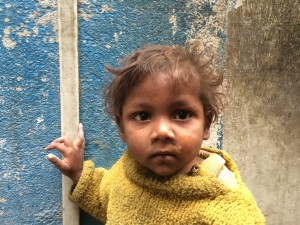
Yet, in reality, children do die from malnutrition in Uttar Pradesh. The latest was two-year-old Sahabuddin, who died May 31, 2008. He lived with his parents in Dhannipur village in Varanasi district of Uttar Pradesh. His parents were too poor to feed Sahabuddin – he weighed only six kilograms when he died. This is Grade III malnutrition, a condition that the world hears of in places like Somalia.

In the Somali Democratic Republic, however, there is no functioning government, there is a high rate of inflation and the country has faced a series of civil wars followed by a war with neighboring Ethiopia that has destroyed whatever little infrastructure that country had. In these conditions – coupled with the harsh African weather that bakes the land as strong as concrete making it unfit for cultivation – starvation, malnutrition and death from starvation are inevitable.

The state of Uttar Pradesh is not so. It has a democratically elected government. It has ministers and secretaries who travel around the state in the name of governance in expensive air-conditioned vehicles. The state government has a woman chief minister at its helm, who has vowed to eradicate discrimination and poverty in the state.

UPI AsiaOnline | Bijo Francis | Link

You've reached the bottom of this page, but there are many more pages to be read and stories to be told ...

Annual Examination, April 2010

    DSC03573DSC03513DSC04171

Poems for Peace

    Poems for PeacePoems for PeacePoems for Peace

Ganga Clean Up

    P1090158P1090207P1090147

New Uniforms, Yeah!

    DSC02112DSC02038DSC02056

Thank you Geir and Etne!

    P1050499.jpgP1050321.jpgP1040836.jpg

Search


Teaching Children How to Dream

(English and Hindi with English subtitles)

About BSS from Alfredo and Anel

(Spanish with English subtitles)

A letter to his children

"These are the things I want for you - to grow up in a world with no limits on your dreams and no achievements beyond your reach, and to grow into compassionate, committed women who will help build that world. And I want every child to have the same chances to learn and dream and grow and thrive that you girls have. That's why I've taken our family on this great adventure."

Barack Obama ~ USA President

Share this website

Bookmark and Share